Faculty workshops, discussions and library initiatives: My big ideas and plans

In addition to my normal stuff (library instruction, reference, web design, committees) I’m been thinking about various discussions/workshops/plans for the future I’d like to pursue over the next few months:

lightbulb. Courtesy of Flickr user Tim Cummins
  • A faculty workshop about managing research and teaching information.  Most faculty are overwhelmed with information for their scholarly activities.  Some of them are familiar with citation managers (Endnote, Zotero, etc.) but not all.  I’d like to offer a workshop to discuss various free and not-free citation and document managers, as well as bookmarking tools like Connotea, CiteULike, delicious and Diigo.  I’ve explored many of these tools.  Some work for me, some don’t.  Faculty may appreciate being introduced to some of them.
  • A faculty workshop about creating assignments that effectively teach students literature research skills.  Some faculty aren’t interested in having a librarian come to their class and teach an information literacy session.  Would they be interested in how to make their assignments a bit better?  I recently chatted with a faculty member and gave him some feedback on a library assignment that he regularly gave his students – it hadn’t been updated in years, nor had he ever received feedback.  I was able to tell him what questions we were seeing at the reference desk.  He was thankful for the feedback.  I’m not sure that faculty would respond to a workshop like this, but it may be worth trying.
  • A series of campus-wide discussions.  The new “Scholarly Communication” group at my library is starting to think about ways to engage the college faculty and what role the library (and librarians) play in promoting/assisting/recognizing faculty scholarship.  We are talking about hosting (with the teaching and learning center) a discussion on open access.  Perhaps there could be a series of discussions about trends in Scholarly Communication:  digital humanities, sharing data, discovery of research via social networking, unusual new publications (incorporating video, for example).
  • Preserving student scholarship.  Each Spring, SUNY Geneseo hosts Great Day: “a college-wide symposium celebrating the creative and scholarly endeavors of our students.”  After Great Day, some of the posters are displayed for a year or two in the library or other academic buildings, but many are lost.  What if the library tried to preserve digital versions of these posters and presentations in an institutional repository?  What would be involved (organizationally)?  How do we deal with copyright?  What options do we offer students? Creative commons? Transfer copyright to Geneseo?  Maintain copyright?  Access?
  • Should I try to convince library staff to adopt an open access policy for their publications?  Gold?  Green?  (See Peter Suber’s excellent introduction to OA for definitions.)  Would folks object to such a policy?
  • I would love to have a discussion with library staff about the future of librarianship.  Recent discussions at the ScienceOnline2010 conference, friendfeed discussions, blog posts and other items make me think about where my profession is headed.  I would love to sit down with my colleagues to chat about it.  Trying to find a time when more than two or three of us can get together?  That’s the challenge.

There’s the list that I thought of this afternoon.  Nothing groundbreaking, but it should keep me busy for a little while.

Library Day in the Life

Round 4 of the Library Day in the Life project is today.  Here is what I spent my time doing:

8:15am – Arrive at work.  Check email, resolve some scheduling issues regarding March CHEM 216 (Organic Chemistry) information literacy classes.  Thank my non-sciencey colleagues profusely for helping me teach seven 2 hour sessions in one week.

9-10am – Head down to a “satellite” library to look at Department of Agriculture documents with the Government Documents librarian.  We discuss what to keep and what to ditch and what to catalog.  Brief discussion of unused library space and the use of USGS documents and the scanning of NYS Museum docs.  Run into a biology faculty member.  Remind myself to stop by and see him when I am next in the Integrated Science Center.

10am – Tea.  Because life is better with tea.

10:10-11:45am – Work on a lesson plan for an upper level math class I will teach later this afternoon.  Teaching students about how to determine the intended audience of a particular article, resources to help spark research topic ideas, and basic search strategies.

11:45am – Tea and lunch and phone calls.  Talk with director of the Teaching and Learning Center about having a brown bag luncheon about open access.  He likes the idea, now I just have to find folks to come and get the thing organized.

12:15pm – Spend 15 minutes shopping online trying to find a dress for a wedding in May.  Give up.

12:30pm – Fix an IM chat widget for our new libguides implementation.  At least, I think it’s fixed. [Discover later tonight that it wasn’t fixed. Hmmm.]

12:45 – 2pm Organize and plan for a series of information literacy sessions in three biology classes with one professor.  Three different sessions are later this week.  Create survey about the primary literature to send to students to see if they can pick out a primary research article when they see one.  See poll

2pm – Discussion with associate director about library support for scholarly activity and why librarians need to stop going to library conferences.  He wishes there was library representation at this conference.

2:15pm – Tea

2:30 – Review lesson plan for this afternoon’s math information literacy session.  I know the less about the math and computer science literature than the natural sciences, so preparing for this session takes longer than normal.

3pm – Work on a blog post for the Milne Library News Blog.

3:15pm – Work on a blog post for this blog.

3:30pm – Download the latest podcasts and update my iPhone so I have something to listen to on my way home.

3:50pm – Head to the classroom for my information literacy class to set up tabs on computer.

4pm – Teach a session on understanding audience, finding a topic and finding literature for an upper level Math seminar class.

5:15pm – Go home.

7:00pm – Receive a thank you email from the Math professor regarding our class earlier in the day.  Do a little happy dance that it went well.

Why academic librarians need to stop going to library conferences

ala conference - 'the stacks'
The vendors at the ALA conference, "The Stacks". From flickr.com user Squid!

And start going to the conferences our users – especially the faculty we work with – go to.

OK, we don’t have to completely stop going to library conferences, but unless we engage with our users more fully, I think we run the risk of being forgotten.

A bit of background.

At the ScienceOnline2010 conference, two librarians held a session attempting to tell scientists and researchers about library tools that were available.  The ensuing discussion between librarians and scientists solidified some ideas that I’ve been having for a while now about the library world.

Overall, there was a disconnect between the library world and the research world.  Scientists and scholars aren’t aware of what librarians do, beyond the whole ‘buying books’ thing.  And I don’t think that librarians are spending enough time listening to scientists and scholars to figure out what they really need and want.

After reading about this discussion online, a medical researcher responded in a blog post with a rather provocative title about what he thinks librarians can do for researchers.

Librarians – we need to listen to what the researchers are saying, and we need to play an active role in the discussion.  As a profession, I think we are more insular than we should be.  This needs to change.

That’s why we need to start attending the same conferences as the scholars we serve.

By engaging more fully with our users, we will better understand their needs (perhaps even anticipate some of them), and the library conferences we do attend will be more useful.

So, to that end, even though the freebies are more plentiful, I will not be attending the ALA annual conference this summer.  Hopefully, I will head to Denver for the Geological Society of America national meeting in October.  And perhaps the year after that I will make it to the American Chemical Society conference.

Data, Data, Data – ScienceOnline2010

The other major theme to emerge from the sessions I attended at ScienceOnline2010 was data.  All kinds of data.

Data storage - old and new
Data storage - old and new. Courtesy of Flickr user lan-S

Data about articles and journals.  Data about oceans and fish and climate.  Data about scientists, their DNA, their babies (and their babies DNA too, I suppose).

20 years ago, getting your hands on a data set meant knowing someone who knew someone who might be able to send you a disc.

These days, more and more data sets are being shared on the open web.  Sometimes they are easy to find and use, and sometimes not so much.  Sometimes the data require a bit of skill with Excel, and sometimes the data require multiple servers and extensive programming skills.

But it’s out there.

I attended a very interesting session led by John Hogenesch about cloud computing. Some of this was way over my head – I’m not as familiar with bioinformatics as I’d like to be one day, and I only have minimal knowledge of how geneticists are actually using this information.  None-the-less, it was informative to learn about the various trends in cloud computing.  Some of them I am already very familiar with – like wiki’s, Gmail, Google Docs.  I learned more about some services that I only know a bit about.  For example, Google Knol is being used by PLoS to write and publish their “Currents Influenza” online.  Since the authoring, editing and publishing is done online, the journal can quickly get items published and available.  I learned about some services that allow for remote storage and query of information, and how these services can be less expensive (and easier to run) than hosting your own servers.

Jacqueline Floyd and Chris Rowan presented a session on “Earth Science, Web 2.0+, and Geospatial Applications”.  Since my background is in geology, I was particularly intrigued by some of the resources discussed here.  The discussion at the end of the talk centered around some of the difficulties of finding spatial information (some of which I have discussed before).  For example, the USGS provides a wide range of spatial data – geophysical data, hydrological data, geologic data.  Some of this is easier to find (and use) than others.  For example, recent earthquake data is available is an easy to use Google Earth format, but data older than one month requires more complicated searching  (including detailed latitude and longitude coordinates) and the search output requires manipulation to create a visualization.  It could be easier.

One of the last sessions I attended at the conference was a presentation by PLoS managing editor Peter Binfield about article level metrics.  Peter discussed some of the things that the PLoS journals are doing to attempt to measure the impact of individual articles, not the entire journal.  The new metrics were announced in a blog post last summer, and you can see the metrics at work on any article in any of the PLoS journals.  They are using open data and API’s from lots of sources: social bookmarking (like CiteULike and Connotea), citation information (from Google Scholar and Scopus), page views and PDF downloads and lots more.  I think that this is an exciting new way to shed more light on what is going on with individual articles, but there are some challenges ahead.  How will tenure committees analyze this stuff? (Will they bother?)  What does it mean if your article was only downloaded 300 times but your colleague (in a larger discipline like genetics) had an article downloaded 3000 times?  And all of this data they are collecting can lead to lots of analysis.  Librarians have traditionally used citation analysis as a way of understanding the literature of a community, and hopefully these new metrics will give them more tools to use.

Relationships online and off – ScienceOnline2010

ScienceOnline2010 Logo
ScienceOnline2010

One of the major themes of the ScienceOnline2010 conference was actually personal relationships.

Despite the stereotypes of scientists, effective communication of science comes down to effective personal relationships online or off.  For bloggers, journalists, researchers and librarians, personal relationships are an essential part of doing their job well.  In a session called “Trust and Critical Thinking” moderator Stephanie Zvan and panelists Greg Laden, PZ Meyers, Deiree Schell and Kirsten Sanford discussed how essential it was to establish trust and authority in your online or media presence.  We discussed the hope that as more scientists communicate authentically with the public, pseudoscience might be pushed aside – it would be nice if the top Google search results on certain science subjects would come from authoritative folks.

A lightly attended session from librarians Dorothea Salo and Stephanie Willen Brown entitled “Scientists! What can your librarian do for you?” turned into a great discussion about the need for scientists and librarians to work together.  The librarians discussed repositories, how they can help scientists understand copyright, and how they can help teach students about scientific communication.  Since most researchers get a lot of information from their peers, the scientists suggested that one of the ways librarians can be helpful is to help them make these connections – recommending social networks and other tools to assist them in finding collaborators.  (A great list of resources discussed at the session can be found here, and Dorothea’s slides are available here.)

The last session of the conference got a little interesting – called “Online Civility and Its (Muppethugging) Discontents”.  Panelists Dr. Isis, Dr. Free Ride and Sheril Kirshenbaum lead a discussion about what “civility” means and how it applies to online environments.  At one point two participants were kind enough to demonstrate one type of online disagreement – the kind where two folks disagree vehemently about something, but it turns out that they were both talking about something slightly different.  I tend to dislike conflict, but the session gave me an opportunity to think about how ‘civility’ can be used as an excuse to prevent some members of a community from participating fully.

Of course, one of the best parts about a small conference like this is the chance to talk with folks over snacks, tea and available power outlets.  I got a chance to talk with some other librarians and a few scientists – these conversations are wonderful for helping me make sense of the formal talks and giving me ideas for how some of the concepts I learned about can be applied at my library and my college.

Institutional repositories and small institutions

On Friday morning I attended an excellent pre-conference workshop at ScienceOnline2010 lead by Dorthea Salo.  You should read her very interesting article about repositories called “Innkeeper at the Roach Motel“.  The workshop was mainly a discussion with librarians and researchers about the uses, possibilities and problems with institutional repositories.  Most of the participants were from larger universities – those with graduate students and larger faculties than the institution I work at.

For a small institution like mine, having our own institutional repository might not make sense.  We probably don’t have the library staff to run it well.  So what are our options?

Well, first there is a SUNY-wide institutional repository.  Each SUNY campus has some space on it – and each campus seems to be using it for very different purposes – some are using it for archiving documents, some are using it for internal communications.  At the moment SUNY Geneseo isn’t even listed.

Other options include disciplinary repositories.  The most well known is arXiv.org for physics, math and other related fields.  Some of our faculty have deposited pre-prints here.  For our faculty with NIH grants, PubMed Central can be the repository of choice.

But for many of our faculty, their only way of archiving their papers may be to post them on their own personal website, where they might not be as easy to find.

How much does this matter?  How vital are institutional repositories to public access to scientific information?  As publishers grant open access to journal archives and more high quality open access publications become available, will repositories have a function in the future?  I don’t know the answers, but I’ll be paying attention to folks like Dorthea to see how this might work out.

ScienceOnline 2010

This weekend I am in the Raleigh-Durham area for the Science Online 2010 conference.ScienceOnline2010 Logo

The ScienceOnline 2010 conference is a collection of science writers, bloggers and researchers gathered to discuss the dissemination of scientific information in all its forms online.  Of course, I think one could make the argument that almost all scientific communication is now online.  How many scientific publications aren’t available online?  None come to mind.

More specifically, topics at the conference relate to some of the new forms of communicating science (to the public and among scientists) – blogs, twitter, new forms of scientific journals, software applications and more.

I spend a large part of my time at work teaching undergraduate students about how scientists communicate with each other – teaching them to tell the difference between news stories aimed at the general public and scientific articles, teaching them how a review article is different than a primary research article.

One of the things I struggle with is how we teach students to deal with the new and exciting changes that are developing in science communication.  How can students evaluate a comment on a journal article over at PLoS ONE?  How can they locate a journal article that is available free in an institutional repository but not on the publishers web site?  Where does a blog post about a primary research article (like those at ResearchBlogging.org) fit in with news articles, primary research articles or review articles?

So far I have only attended one workshop and the opening keynote address, both of which have been excellent.  This conference is a great opportunity to discuss some of these issues with other folks who are thinking about the same things – I’m really looking forward to the sessions over the weekend.

Books I read in 2009

The only reason I was able to read as much as I did in 2009 is because of the new eBook readers for my iPhone.

Kate
Kate was born in February 2009

In February 2009, I gave birth to my first child, a daughter named Kate, and she kept me busy most of the year.  Thanks to the elegantly designed Kindle reader for iPhone, I was able to read one-handed while feeding or rocking my daughter.

I also used the new Barnes and Noble eBook reader for iPhone, but that app wasn’t quite as elegant.  The pages were just a bit harder to turn, and the need to authenticate using my credit card number was a pain.  I will probably give this app another chance in 2010 – hopefully after Barnes and Noble improves it a bit.

Last year I read a lot of fiction – a bit easier and faster to read than the non-fiction I like.  I found a couple of new authors and rapidly read most of what they wrote.

To find these books in a library near you, you can view this list at WorldCat.org.

Ackerman, Diane. 1990. A natural history of the senses. New York: Random House.

Allen, Sarah Addison. 2008. The sugar queen. New York, N.Y.: Bantam Dell.

Allen, Sarah Addison. 2007. Garden spells. New York: Bantam Books.

Dorfman, Josh. 2009. The lazy environmentalist on a budget: save money, save time, save the planet. New York: Abrams.

Fernyhough, Charles, and Charles Fernyhough. 2009. A thousand days of wonder: a scientist’s chronicle of his daughter’s developing mind. New York: Avery.

Florey, Kitty Burns. 2009. Script and scribble: the rise and fall of handwriting. Brooklyn, N.Y.: Melville House Pub.

Green, Jane. 2009. Dune road. New York: Viking.

Hornby, Nick. 2009. Juliet, naked. New York: Riverhead Books.

Kinsella, Sophie. 2008. Remember me? New York, N.Y.: Dial Press.

Lamb, Cathy. 2007. Julia’s chocolates. New York: Kensington Books.

López, Lorraine. 2008. The gifted Gabaldón sisters. New York: Grand Central Pub.

McInerney, Monica. 2006. Family baggage: a novel. New York: Ballantine Books.

McInerney, Monica. 2009. Greetings from somewhere else: a novel. New York: Ballantine Books Trade Paperbacks.

McInerney, Monica. 2007. The Faraday girls: a novel. New York: Ballantine Books.

McInerney, Monica. 2005. The alphabet sisters: a novel. New York: Ballantine Books.

McInerney, Monica. 2008. Upside down, inside out: a novel. New York: Ballantine Books.

Meacham, Jon. 2008. American lion: Andrew Jackson in the White House. New York: Random House.

Moore, Alan, and Dave Gibbons. 1987. Watchmen. New York: DC Comics Inc.

Morton, Kate. 2008. The house at Riverton: a novel. New York: Atria Books.

Morton, Kate. 2009. The forgotten garden: a novel. New York: Atria Books.

Murkoff, Heidi Eisenberg. 2008. What to expect the first year. New York: Workman Pub.

Myron, Vicki, and Bret Witter. 2008. Dewey: a small-town library cat who touched the world. New York: Grand Central Pub.

Nicastro, Nicholas. 2008. Circumference: Eratosthenes and the ancient quest to measure the globe. New York: St. Martin’s Press.

Okasha, Samir. 2002. Philosophy of science: a very short introduction. Oxford: Oxford University Press.

Shaffer, Mary Ann, and Annie Barrows. 2008. The Guernsey Literary and Potato Peel Pie Society. New York, N.Y.: The Dial Press.

Tomalin, Claire. 1997. Jane Austen: a life. New York: Knopf.

Walker, Kathryn. 2008. A stopover in Venice: a novel. New York: Alfred A. Knopf.

Weir, Alison. 2009. Mistress of the monarchy: the life of Katherine Swynford, Duchess of Lancaster. New York: Ballantine Books.

Weisberger, Lauren. 2008. Chasing Harry Winston. New York: Simon & Schuster.

Why did I become a librarian? Blame my dad.

I just encountered the “Library Routes Project“, started in October, 2009, to document how librarians came to the profession.  In reading through some of the entries, it strikes me that my story is not unique – many of us came to the profession almost accidentally, at the recommendation of a friend or family member or through a serendipitous discovery of a magazine article about librarianship.

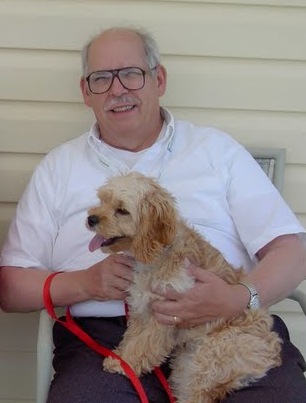
My Dad
My dad provided the push I needed to get my MLS

My short story is that my dad suggested it.

Have you thought about library school?  You should really look into it.

As usual with his pieces of advice, I ignored him for a few years before finally coming to the conclusion that he was absolutely spot-on.

When my dad first mentioned the idea, I was working as a geology lab instructor.  I had finished a graduate degree in geology (from Kent State University) in 2001, and I wasn’t quite sure where I wanted to go from there.  I knew I didn’t want to be a lab instructor for the duration – I wanted a career that had opportunities for advancement and the opportunity to try new things.  Neither was a part of my lab instructor position.  I explored a lot of options:  a degree in environmental engineering? a PhD in Geography? a PhD in Geology?

A question from a student in one of my lab courses brought me back to my dad’s advice.

I have this printout here, but I can’t find the rest of the article.

The student had found a citation from GeoRef, but didn’t have the knowledge or skills to connect the citation with the full text of the journal article.  We talked about it, and he seemed surprised to learn that there were bound journals over in the library.

I started researching ways to help my students with their research skills, and came across the concept of “information literacy“.

I realized that, as a librarian, I could help students in this way.

I started library school in 2005 and started working at my current position a few years later.

My job as a science librarian combined my love of research, my massive curiosity and my interest in educating college students.  As a science librarian, I get to be closely connected to scientific research and help students along their path to becoming scientists.

Thanks, Dad.

Adding value to a basic journal article PDF

Publishing journal articles online opens up a wide variety of options: hyperlinking references, including video and audio, archiving data along with the article, etc.  (You can see some ideas about future scientific articles from Elsevier and Cell here).  Most of these options are not normally exercised, and most users still view journal articles as online PDF’s, which they then either save or print.

Sometimes these PDF’s including an often annoying page at the front or back re-stating copyright information or indicating that the material was downloaded through a particular institutions subscription.

Just today, I downloaded an article from an August issue of Science and was pleasantly surprised that this ‘cover page’ actually included some useful information.  In addition to providing the normal article metadata, the links provided may actually be useful, at least to those with a subscription.

SciencePDFinfo
Information included on the "cover page" of a recently downloaded article from Science.

I especially noted the first item in the list of links informing readers that there had been a correction (in this case a relatively minor correction to a figure), and links to articles cited by this paper, including those articles available for free.

I wondered if a similar method was used when a paper was retracted.  A brief search turned up the PDF of a retracted paper published in 2006 and retracted in 2007.  Across the first page of the article in red letters was printed:

Retracted

At the end of the PDF of the 2006 article was the text of the “Editorial Expression of Concern” published 7 months later, and the official retraction of the paper published 9 months after that.

So here, in one PDF document, we have the history of this paper.

This is vital for the undergraduate students I serve.  Without this, a student would have no idea that an article had been retracted for any reason.  This is just one more tool to help novice scientists get into the world of their scientific disciplines.